
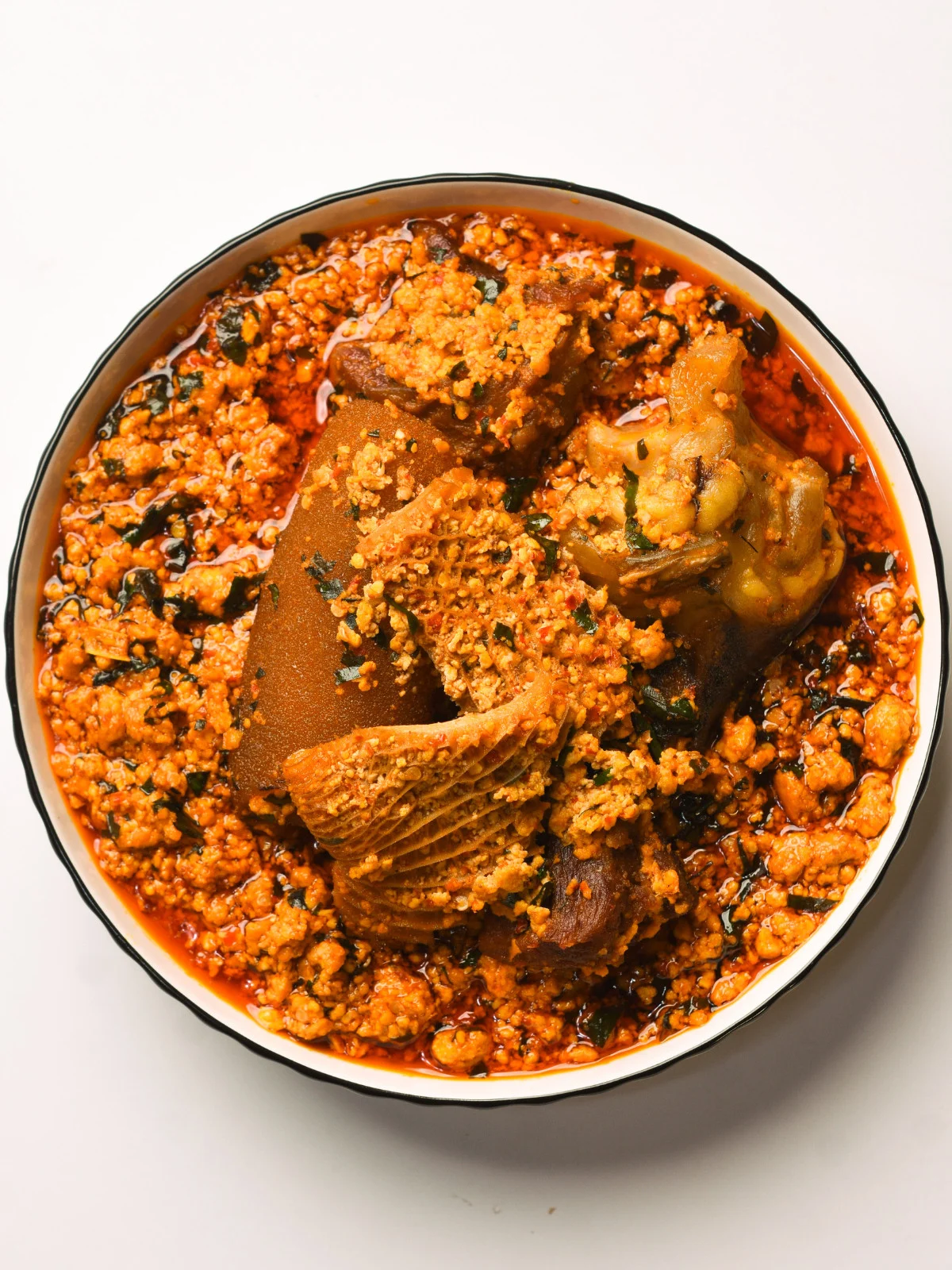
Egusi soup holds a special place in Nigerian cuisine. Made from ground melon seeds, this thick, hearty soup appears at celebrations, Sunday dinners, and regular weeknight meals. It’s comfort food in the truest sense – rich, filling, and deeply satisfying.
The first time I made egusi soup on my own, I called my mother three times. Not because the recipe is complicated, but because I wanted to get it right. She kept telling me to trust my instincts, to taste as I went, to adjust based on what looked and smelled right. That’s how most Nigerian cooking works – the recipe gives you structure, but your senses tell you when it’s done.
What Makes Egusi Soup Special
The base of egusi soup is ground melon seeds, which give the soup its distinctive nutty flavor and thick texture. When cooked properly, the ground egusi forms small, tender lumps throughout the soup, creating interesting texture contrasts with the vegetables and meat.
Different regions and families have their own variations. Some prefer smooth egusi without lumps. Others like big chunks of protein. Some add bitter leaf, others use spinach or pumpkin leaves. There’s no single correct version, just the way your family makes it.
Understanding the Ingredients
Egusi seeds, also called melon seeds, are available at African grocery stores or online. They come whole or ground. Whole seeds last longer in storage, but ground seeds save time. If you buy whole seeds, you can grind them in a blender or food processor. The texture should be like coarse breadcrumbs, not a fine powder.
Palm oil is traditional and gives the soup its characteristic red color and rich flavor. If you can’t find palm oil, you can use vegetable oil, but the taste will be different. Red palm oil is high in vitamins and adds an authentic flavor that’s hard to replicate.
The protein can vary widely. Beef, goat meat, dried fish, stockfish, and snails are all traditional additions. You can use whatever combination you prefer or have available. The key is to cook tougher meats first until tender before adding them to the soup.
Choosing Your Greens
Bitter leaf is traditional in many regions, but it requires preparation – washing multiple times to reduce the bitterness. Spinach is the easiest substitute and widely available. Pumpkin leaves, also called ugwu, are authentic and delicious if you can find them. Water leaf is another good option.
Whatever greens you use, add them toward the end of cooking. Overcooked greens lose their color and nutritional value. A few minutes of simmering is enough to wilt them and incorporate them into the soup.
The Technique That Makes It Work
The key to good egusi soup is in how you cook the ground seeds. Some cooks fry the egusi in oil first before adding liquid. This brings out the nutty flavor and helps prevent lumps from becoming too dense. Others add the egusi directly to the simmering stock, stirring constantly to incorporate it.
I prefer the frying method. Heat palm oil until it’s hot but not smoking. Add the ground egusi and stir constantly for about five minutes. The egusi will darken slightly and release its aroma. This step makes a real difference in the final flavor.
Building Layers of Flavor
Start with well-seasoned stock. If you’re using meat, cook it with onions, seasoning cubes, and pepper until tender. Use that cooking liquid as your stock. The meat should be falling-apart tender before you even start building the soup.
Add your ground crayfish early – it adds depth and complexity. The crayfish flavor mellows as it cooks, becoming part of the overall taste rather than standing out on its own. Don’t skip this ingredient even though it’s small in quantity. It matters.
Common Mistakes
The most common mistake is adding too much liquid at once. Egusi soup should be thick and hearty, not watery. Add stock gradually, stirring and checking the consistency as you go. You can always add more liquid, but you can’t easily thicken soup that’s too thin.
Another mistake is overcooking the vegetables. They should be vibrant green and tender, not olive-colored and mushy. Add them in the last ten minutes of cooking and no more.
Using low heat once the soup starts simmering is crucial. High heat can cause the egusi to seize up and become rubbery. Gentle simmering allows all the flavors to blend while keeping the texture right.
What to Serve With It
Egusi soup is traditionally eaten with swallows – pounded yam, eba (garlic), fufu, or amala. These starchy sides are meant to be formed into small balls with your hand and dipped into the soup. The combination of the thick soup with the smooth, bland swallow is perfect.
If you’re not familiar with swallows or don’t have access to them, you can serve egusi soup with rice. It’s not traditional, but it works. White rice, in particular, soaks up the rich sauce nicely.
Storage and Reheating
Egusi soup keeps well in the refrigerator for up to four days. In fact, many people say it tastes better the next day after the flavors have had time to blend. Store it in an airtight container.
When reheating, add a splash of water or stock because the soup thickens as it sits. Heat gently over medium-low heat, stirring occasionally. Don’t use high heat or microwave on full power – gentle reheating preserves the texture better.
Making It Your Own
Once you’ve made basic egusi soup a few times, start experimenting. Try different combinations of protein. Adjust the pepper level. Use different greens. Add okra for extra thickness. Some people add a bit of ogiri or iru for fermented flavor. Others add egusi to other soups for added richness.
The recipe below is a straightforward version that covers the basics. Think of it as your starting point. As you cook it more, you’ll develop your own preferences and techniques.
Ingredients
| Ingredient | Amount | Notes |
| Ground egusi (melon seeds) | 2 cups | Available at African stores |
| Palm oil | 1 cup | Red palm oil for authentic flavor |
| Beef or goat meat | 2 pounds | Cut into chunks |
| Stockfish | 1 medium piece | Soaked and cleaned |
| Dried fish | 2 medium pieces | Cleaned and deboned |
| Ground crayfish | 1/2 cup | Adds flavor |
| Spinach or bitter leaf | 4 cups chopped | Washed thoroughly |
| Onions | 2 medium | One for meat, one for soup |
| Scotch bonnet peppers | 2 to 4 | Adjust to heat preference |
| Seasoning cubes | 4 | Maggi or Knorr |
| Locust beans (iru) | 2 tablespoons | Optional, for depth |
| Stock or water | 6 to 8 cups | Start with less, add as needed |
| Salt | To taste | Add gradually |
| Pumpkin leaves (ugwu) | 2 cups | Alternative to spinach |
| Ground pepper | 2 teaspoons | Additional heat and flavor |
Instructions
Step 1: Prepare Your Protein
Season the beef or goat meat with one chopped onion, two seasoning cubes, salt, and a bit of pepper. Add just enough water to cover the meat. Bring to a boil, then reduce heat and simmer for 45 minutes to one hour until the meat is tender. Add the stockfish and dried fish in the last 15 minutes of cooking. Keep the cooking liquid – this is your stock. Remove the meat and fish and set aside.
Step 2: Prepare the Egusi Base
Heat the palm oil in a large pot over medium heat. When the oil is hot, add the ground egusi. Stir constantly for about five minutes. The egusi will darken slightly and smell nutty. This frying step is important for flavor development.
Step 3: Build the Soup
Add the chopped onions to the egusi and stir for two minutes. Add the ground crayfish and blend peppers. Stir well to combine. Add about two cups of your meat stock. Stir constantly to prevent lumps from forming. The mixture should be thick but pourable.
Step 4: Add Protein and Simmer
Add your cooked meat, stockfish, and dried fish to the pot. Add the locust beans if using. Stir gently to distribute everything evenly. Add more stock gradually until you reach your desired consistency. The soup should be thick and hearty, not watery.
Bring to a gentle simmer. Add the remaining seasoning cubes and adjust salt and pepper to taste. Cover and simmer on low heat for 20 minutes. Stir occasionally and check the consistency, adding more stock if needed.
Step 5: Add Vegetables
While the soup simmers, wash your greens thoroughly. If using bitter leaf, wash multiple times to reduce bitterness. Chop the greens roughly. In the last ten minutes of cooking, add the chopped vegetables to the soup. Stir them in, cover, and let them wilt.
The greens should be tender but still bright green. Don’t overcook them. Taste and adjust seasoning one final time. The soup should be rich, well-balanced, and aromatic.
Step 6: Rest and Serve
Turn off the heat and let the soup rest for five minutes before serving. This allows the flavors to settle. Serve hot with your choice of swallow or rice. Enjoy immediately while everything is fresh and hot.
